Bachelor Project · Full-stack MVP
TAS
A full-stack prototype with separate patient and therapist experiences, structured journal analysis, and local AI inference.
- Year
- 2026
- Responsibilities
- Product design · Full-stack engineering · Data architecture · Local AI integration
- Next.js
- React
- TypeScript
- FastAPI
- PostgreSQL
- Ollama
- Gemma 3
Technology
Technology stack
The prototype uses one shared Next.js frontend, a FastAPI core API, PostgreSQL persistence, and a separate service for local analysis.
- Frontend
- Next.js, React, TypeScript, Tailwind CSS, React Hook Form, Recharts
- UI
- shadcn/ui, Radix UI, Base UI, Lucide
- Backend
- FastAPI, Pydantic
- Data
- PostgreSQL, SQLAlchemy (async), asyncpg, Alembic
- Authentication and security
- JWT, python-jose, argon2-cffi, cryptography
- Local analysis
- FastAPI, HTTPX, uvicorn, Ollama, Gemma 3
- Infrastructure
- Docker
Project scope
Scope of work
I designed the interaction model and the patient and therapist interfaces, then implemented the authentication flow, API integration, backend endpoints, database models, persistence, structured analysis output, local model integration, and application architecture.
Product overview
Between-session journal data for therapist review
Patients can record mood, energy, experiences, and an optional written reflection between therapy sessions. Therapists receive a structured overview of recent activity, mood development, recurring topics, and risk-related indicators.
TAS is a decision-support prototype. It supports preparation and orientation, but it does not replace therapeutic judgment.
- Patient input
- Structured mood and energy values with an optional reflection.
- Therapist review
- Activity, longitudinal values, topics, and indicators in one view.
- Clinical boundary
- Interpretation and clinical decisions remain with the therapist.
Product interfaces
Patient and therapist areas
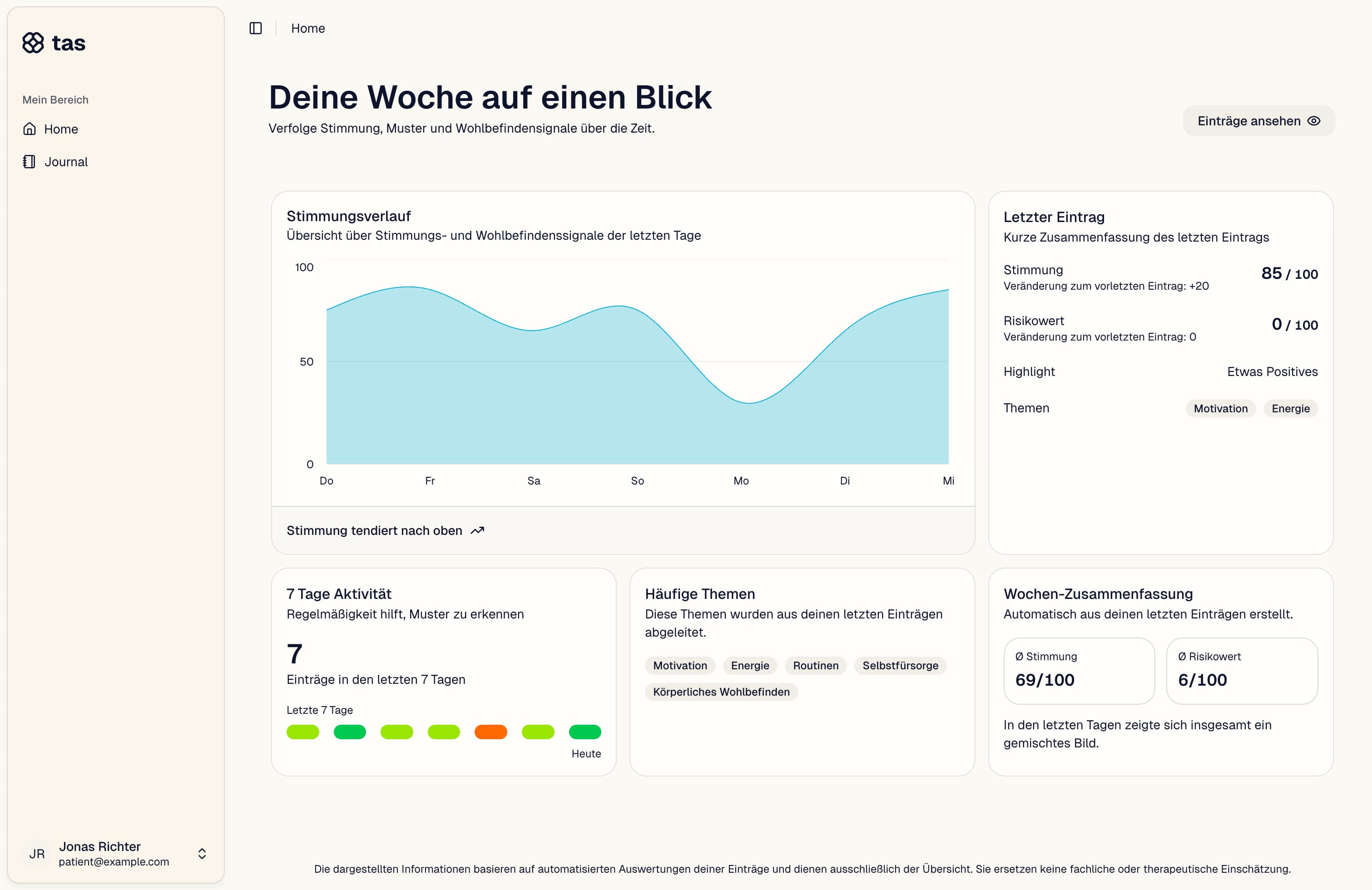
I implemented both role-separated areas in one shared Next.js frontend. Navigation, workflows, and available data change with the authenticated role.
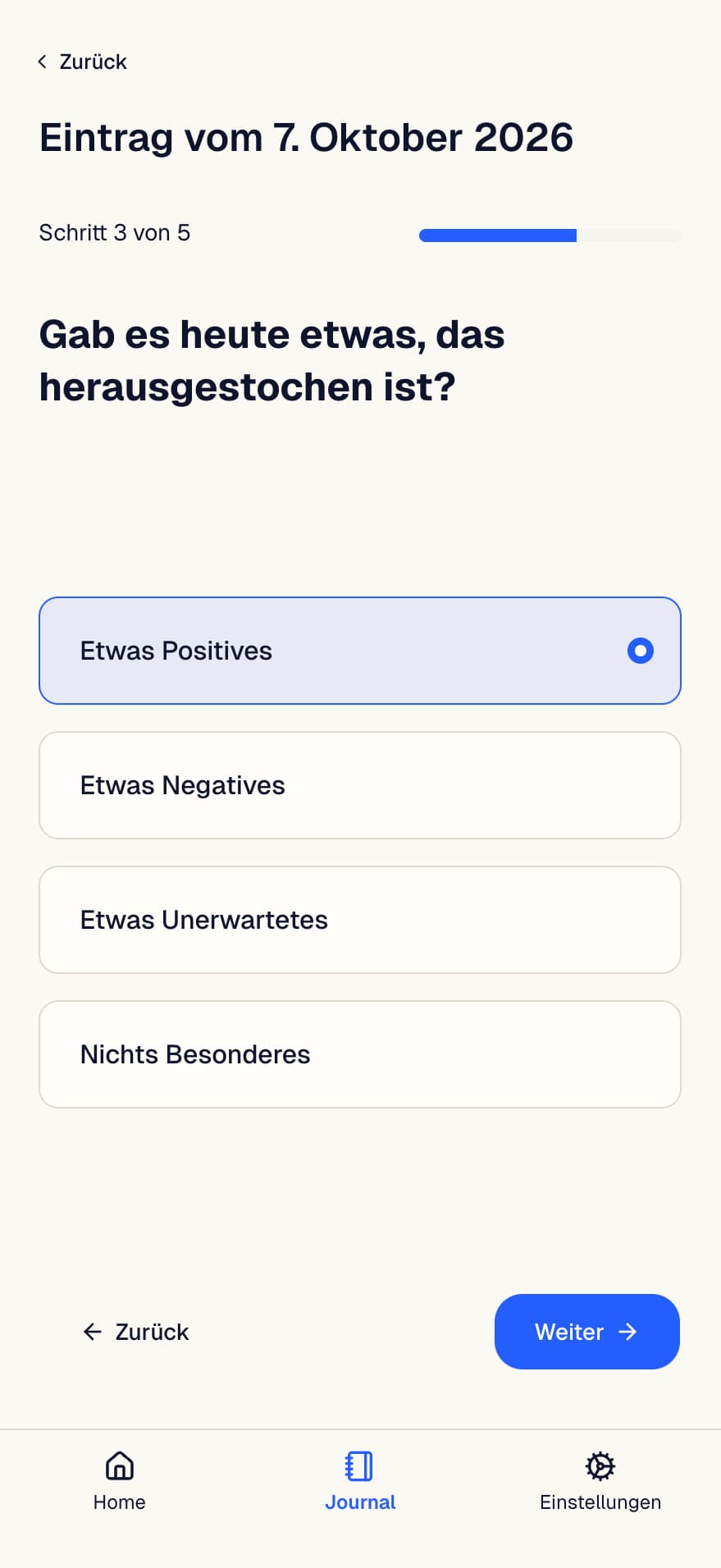
For patients
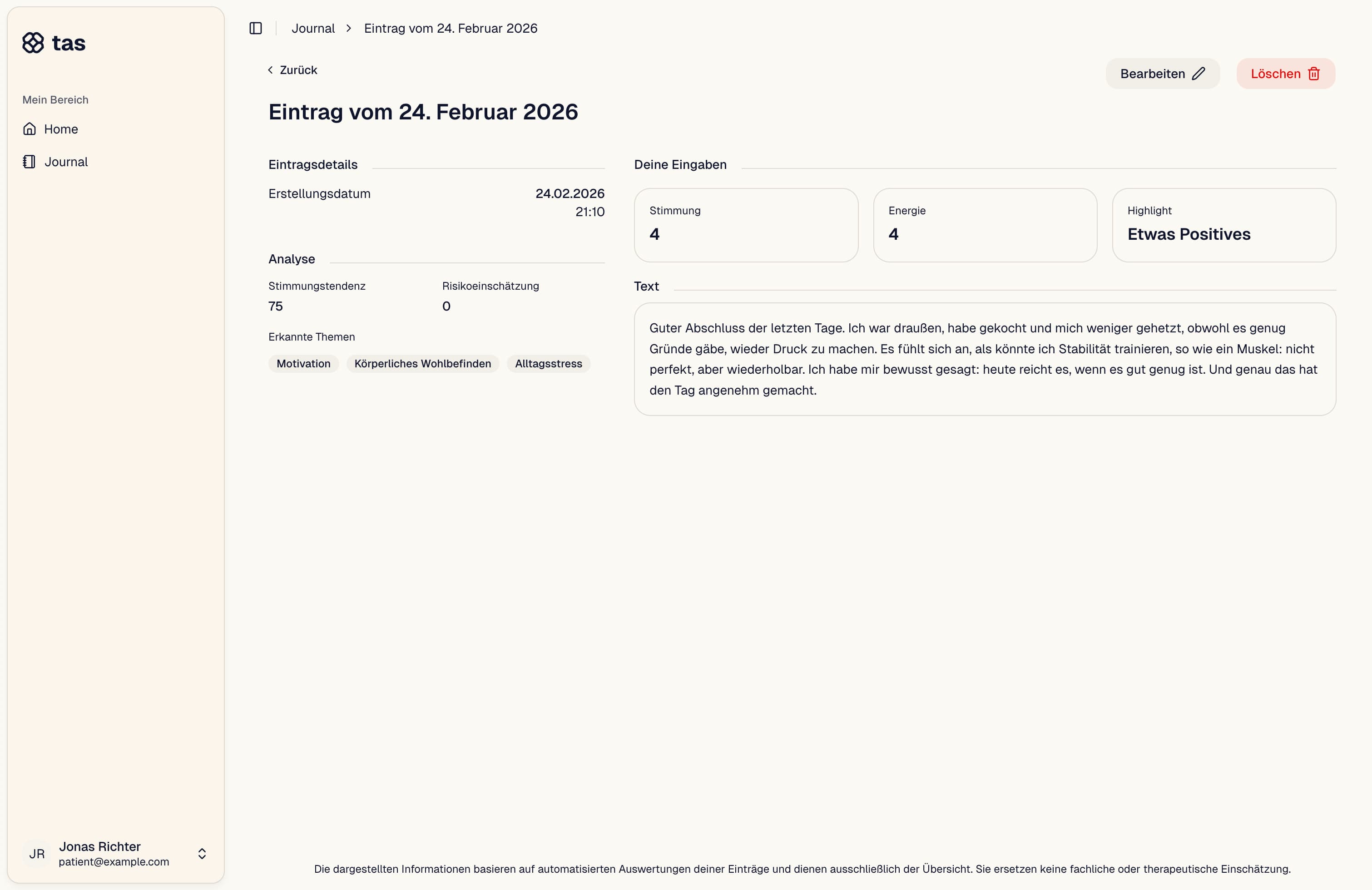
Patients record mood and energy, with space for an optional written reflection. Their journal brings past entries and mood history together, with the same workflow available on mobile.
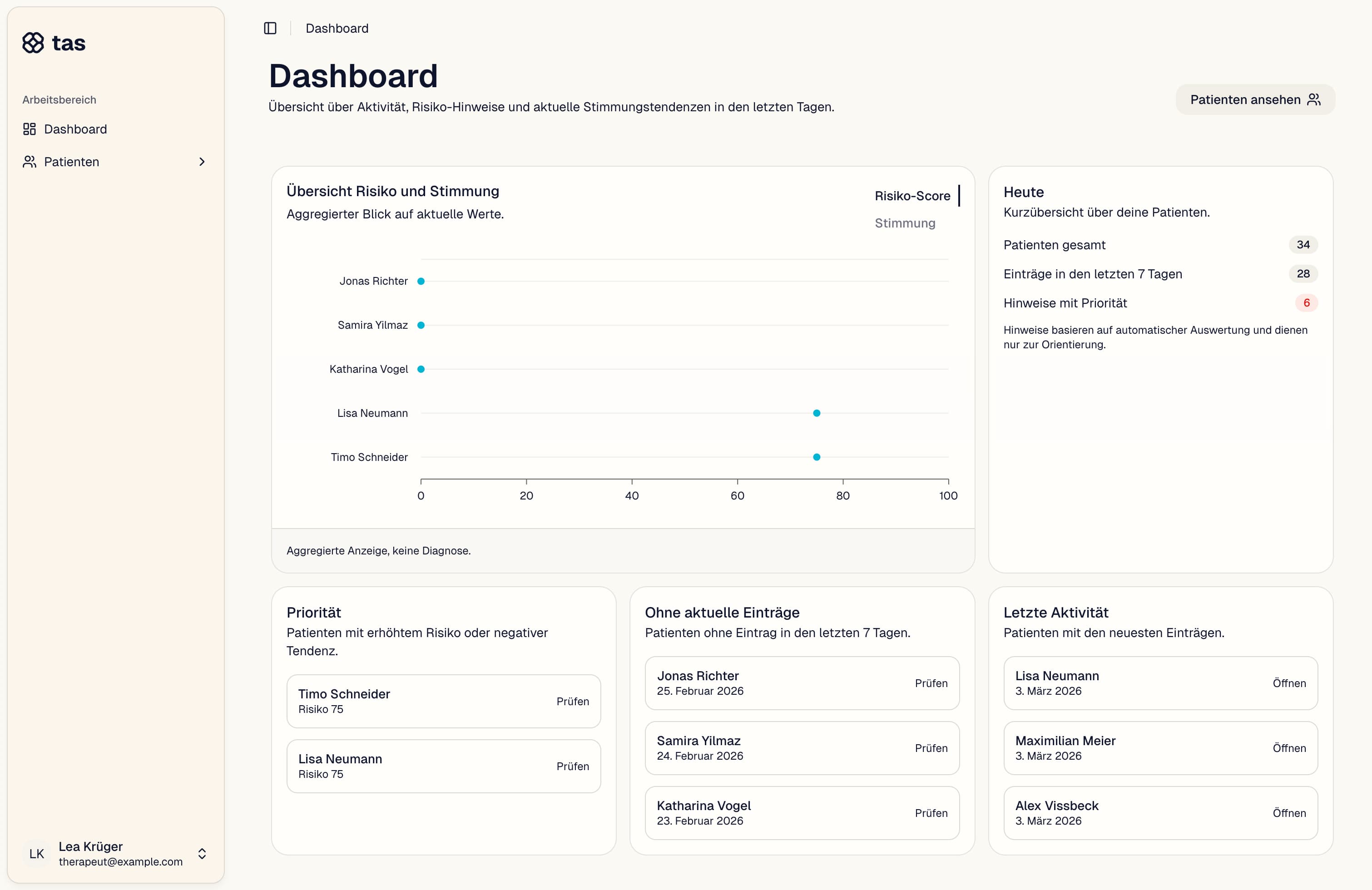
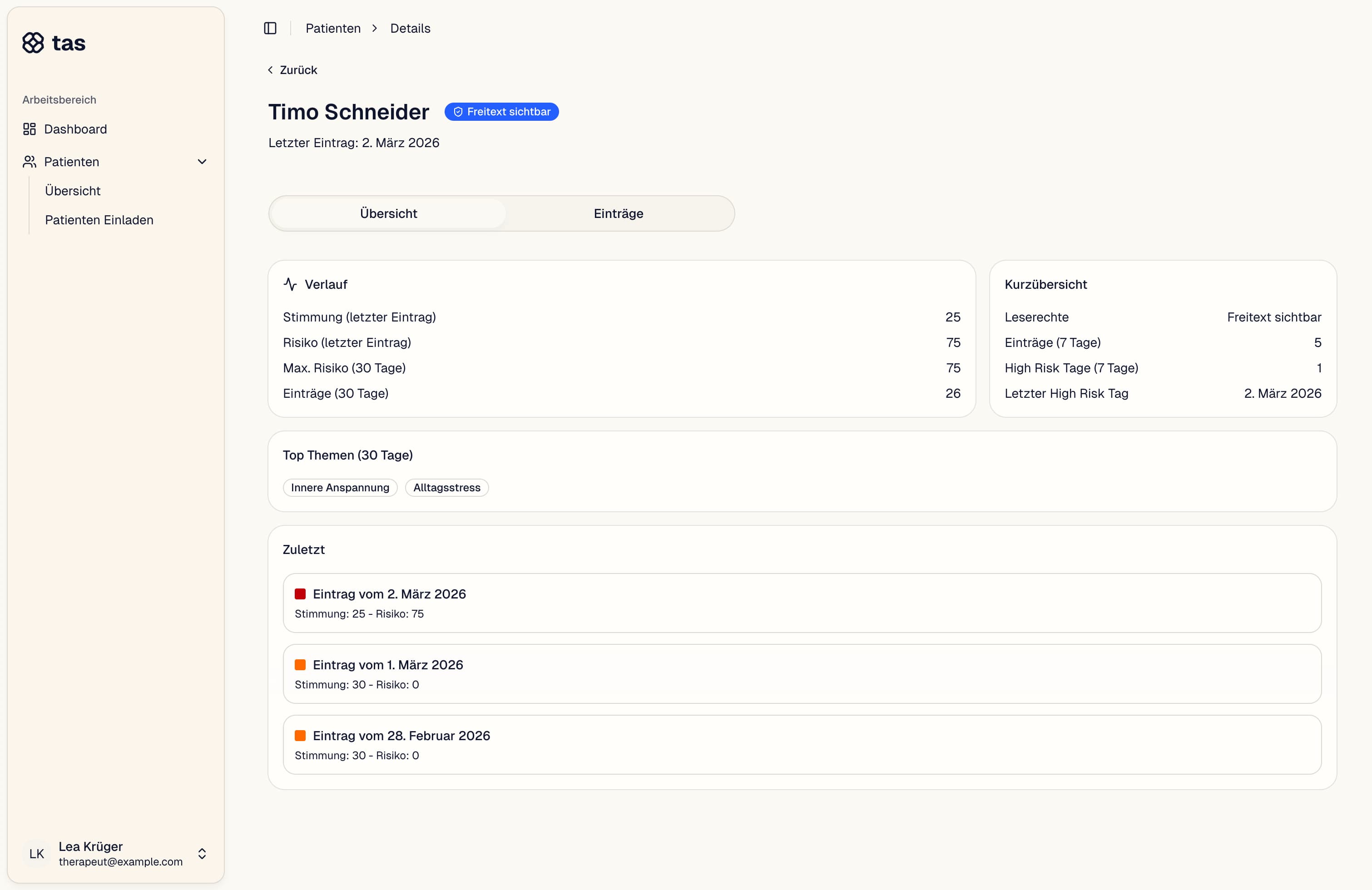
For therapists
Therapists start with an overview of their patients and recent journal activity. Opening a patient record brings mood changes, recurring topics, and analysis indicators into one view for review before a session.
Journaling and local analysis
Structured local journal analysis
Journal entries contain structured mood and energy values plus optional reflection text. After the core API stores an entry, a separate stateless service sends the relevant data to Gemma 3 through a local Ollama runtime. The service returns typed JSON, which is validated before the core API stores mood values, topics, and risk-related indicators.
- Journal entry
- Core API
- Analysis service
- Local Gemma 3
- Validated metadata
Consent and privacy
Patient-controlled reflection visibility
Narrative journal content is not automatically visible to therapists. Patients control whether their reflection text is shared. Without consent, therapist views are limited to permitted structured indicators and non-sensitive activity data.
Supporting excerpts appear only when reflection visibility has been granted. Derived indicators do not expose private reflection text.
- Journal entry
- Structured indicators (and supporting excerpts)
- Therapist overview
Therapist dashboard
Activity, mood, and analysis overview
The dashboard combines recent activity, mood development, and analysis indicators so therapists can identify patient records that may need closer review. Patient detail pages add longitudinal context. The dashboard supports session preparation and orientation rather than continuous real-time monitoring.
Engineering
Application architecture
One Next.js frontend contains separate patient and therapist areas. The core API is the authoritative gateway for authentication, roles, access rules, persistence, and calls to the analysis service.
Persistence path
Analysis path
- Core API
- Handles authentication, role checks, consent rules, and data shaping.
- PostgreSQL
- Stores canonical journal entries and validated analysis results.
- Analysis service
- Processes inference requests without making access-control decisions or retaining request data.
- Docker
- Runs the local backend, database, and analysis environment.
Frontend
Frontend implementation
I implemented the role-separated navigation and workflows in one responsive frontend and connected the interface to authentication, form state, validation, and API data.
- Role-separated workflows
- Patient and therapist routes use different navigation and available actions.
- Responsive layouts
- Journal, dashboard, and patient-detail views adapt across desktop and mobile.
- Timelines and charts
- Recharts and summary values present longitudinal journal and mood data.
- Forms and validation
- React Hook Form manages journal input, validation, and submission state.
- Authentication and API
- Server-managed authentication and typed data contracts connect the frontend to the core API.
- Interface states
- Loading, empty, feedback, and disabled states cover routine interface conditions.